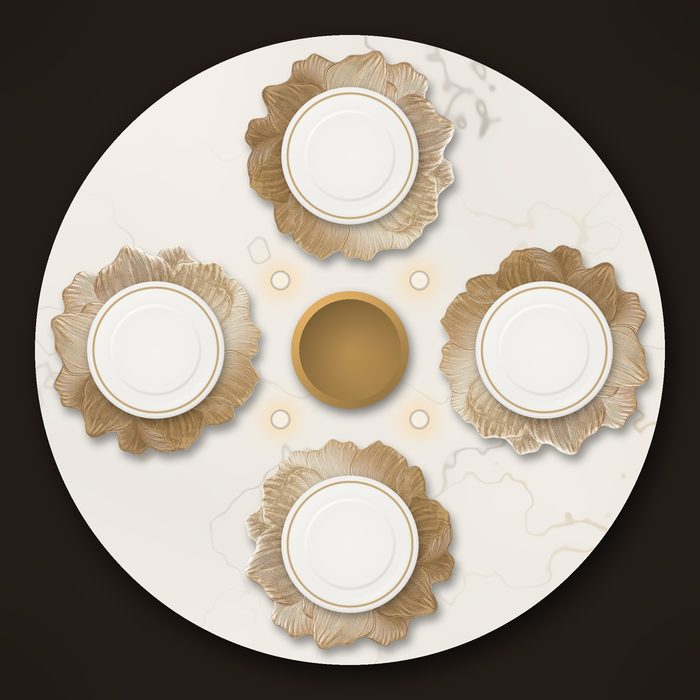
How to set a royal table for four
A formal-looking table in about ten minutes, from the placemats up.
4 min readAvailable on Amazon, Walmart and Best Buy. Where to buy
Zari, Jaal, Kundan, Sheesh Mahal: what each name means, and why we chose it.
5 min read
Every North India Company design is named after something from the palaces, gardens and crafts of North India. Here is what each name means.
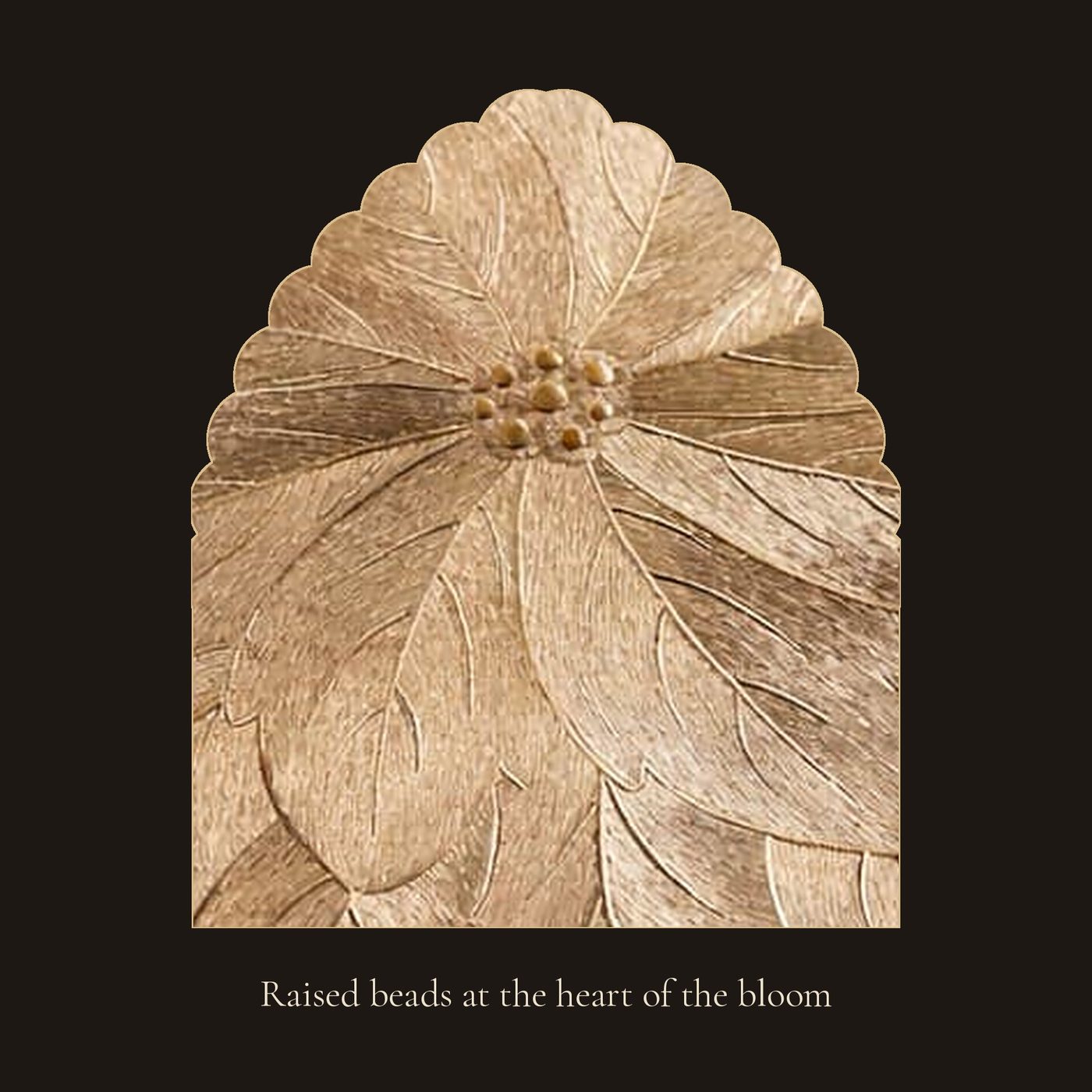
The fine gold thread used in royal Indian embroidery. The petals of Zari Bloom are drawn in lines as fine as the thread itself.
The carved stone lattice screens of Mughal buildings, which let light and air through in patterns. Jaal Leaf Lace sets solid leaves on a fine openwork net in the same spirit.
A traditional North Indian way of setting stones in gold, long associated with royal jewelry. The beaded center of Kundan Blossom is a nod to it.
A "palace of mirrors," the name given to rooms whose walls are inlaid from floor to ceiling. Our Sheesh Mahal designs set ivory and gold blossoms in rows like that inlay.
The peacock feather, a symbol of royalty across India. Morpankh turns it into hundreds of fine gold lines.
The great plane tree of Kashmir, whose leaf is a much-loved motif in Kashmiri craft. It gives its name to the Chinar Leaf placemat and runner.
The pomegranate blossom of Persian and Mughal poetry, and the oversized bloom on Gulnar Bloom.
Mehtab means moonlight, fitting for our palest design, Mehtab Starburst. Noor means light, and Noor Lace lets the table glow through it. Nishat Bagh is the Mughal terraced garden on Dal Lake in Srinagar, which inspired Nishat Garden.
A chatai is the woven reed mat found in homes across India; the Chatai Weave runner borrows its checkerboard. A pankha is a hand fan, once waved in the royal courts, and the fan-shaped leaves of the Pankha Leaf runner take after it.
A formal-looking table in about ten minutes, from the placemats up.
4 min read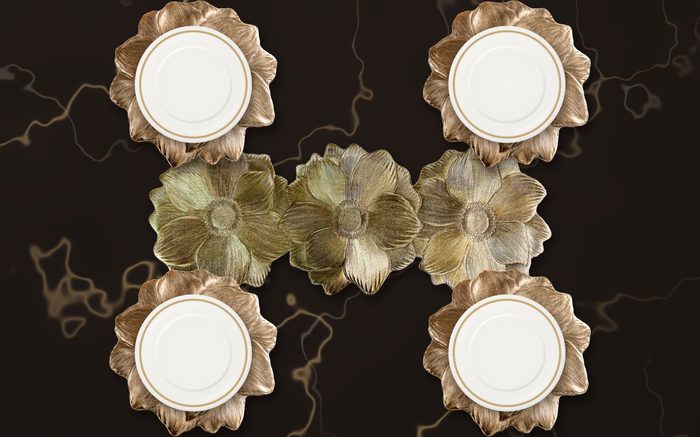
What each one does, and how to layer them without the table looking busy.
4 min read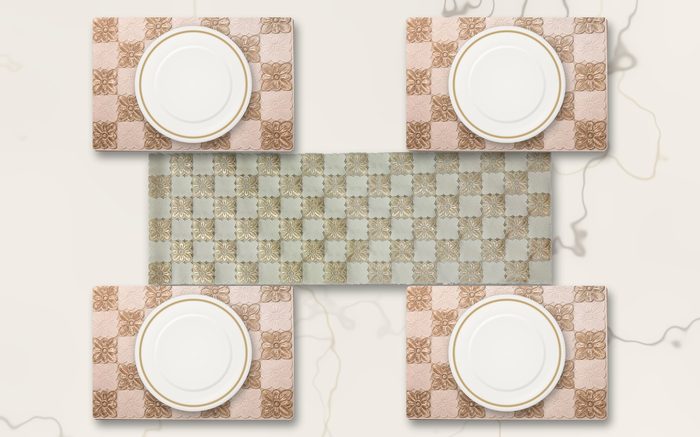
How shape, size and table size work together, with a few numbers to plan by.
3 min read