How to set a royal table for four
A formal-looking table in about ten minutes, from the placemats up.
4 min readAvailable on Amazon, Walmart and Best Buy. Where to buy
What each one does, and how to layer them without the table looking busy.
4 min read
Placemats and runners do different jobs. Placemats mark out each place and keep plates off the table. A runner anchors the center, where serving dishes, candles and flowers sit. Knowing which job you need done makes the choice easy.
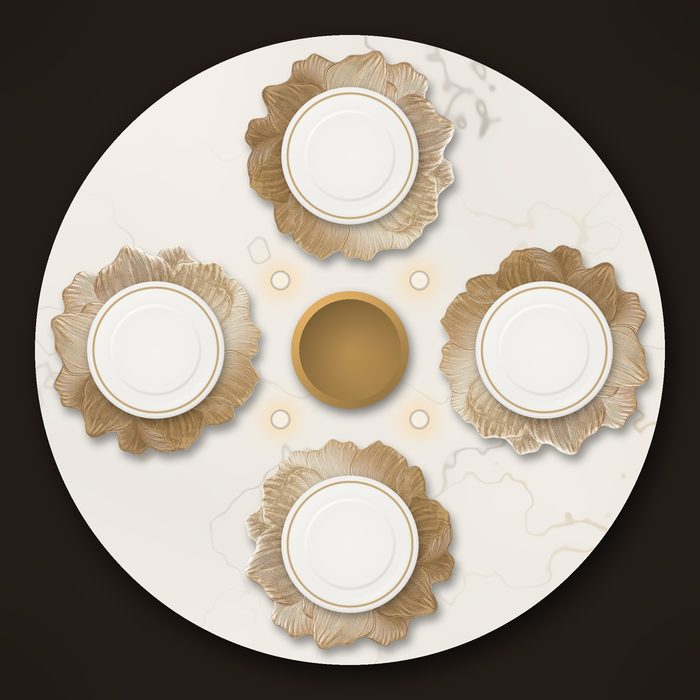
Choose placemats alone for everyday dinners, for round tables, and whenever the table itself is beautiful enough to show. Four placemats on a bare walnut or marble top look deliberate and uncluttered. Our openwork designs, such as Nishat Garden and Jaal Leaf Lace, let the surface show through the pattern.
A runner by itself suits a sideboard, a console, a coffee table or a buffet line. On a dining table it works when you want a centerpiece but no formal settings, for a relaxed lunch or a table that is mostly for show between meals.
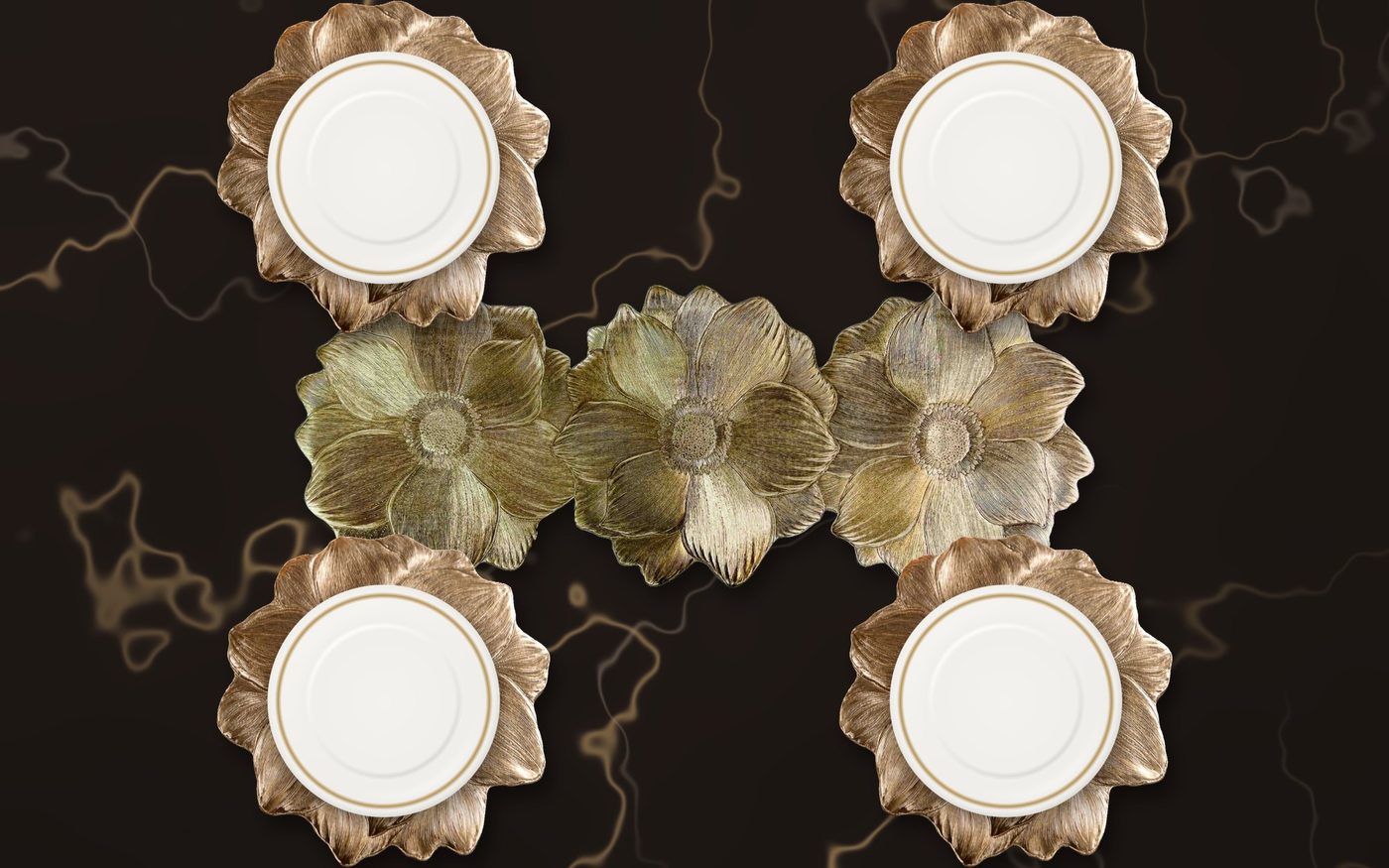
For a dinner party, use both. Lay the runner down the center first, then place the mats at each setting. It is fine for the edge of a placemat to overlap the runner slightly on a narrower table.
The easiest way to get it right is to use one design throughout. Four of our patterns come as both placemats and a runner: Sheesh Mahal, Morpankh, Gulnar Bloom and Chinar Leaf. If you would rather mix, pair a busy pattern with a quiet one: the woven Chatai runner under plain round settings, or a single-bloom placemat alongside the Pankha runner.
Let one piece be the star. If the runner is bold, keep the placemats quiet, and the other way round. Two statement pieces compete; one statement and one supporting piece look planned.
A formal-looking table in about ten minutes, from the placemats up.
4 min read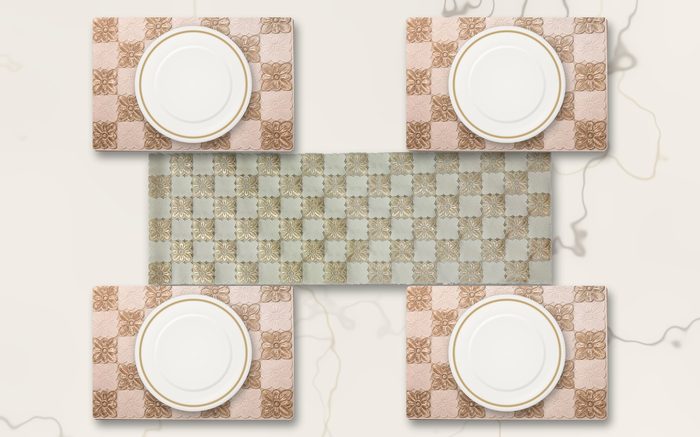
How shape, size and table size work together, with a few numbers to plan by.
3 min read
Which of our finishes suit marble, walnut, oak and glass, and what to put on top.
4 min read